Alcohol-induced blackouts
The Girl on the TrainAlcohol-induced blackouts are periods of missing memory that Rachel Watson fears may conceal actions she cannot later recall. In the novel, they are more than ordinary forgetfulness: hours seem to vanish, while Rachel is left to interpret physical aftereffects, other people’s accounts, and her own alarming guesses about what happened. The distinction between what she remembers, what she suspects, and what she imagines becomes essential to the story’s uncertainty.
Definition and Experience
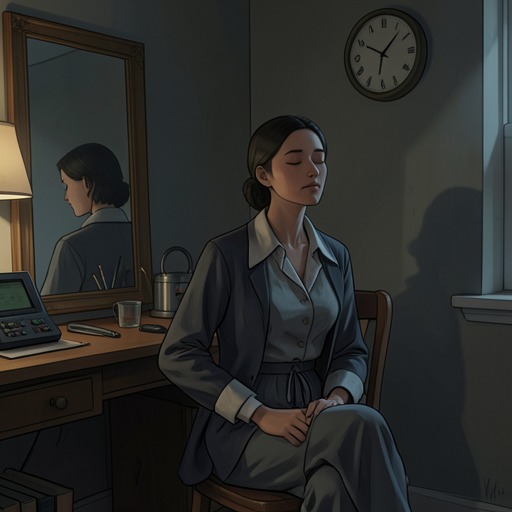
Rachel understands a blackout as a total loss of memory for a stretch of time, not simply an inability to remember a detail or reconstruct an evening clearly. She describes the missing hours as a void: she may know the broad sequence of where she went, yet be unable to recover what occurred within it. The distinction matters because a person can appear to have continued through events even when, afterward, Rachel has no recollection to consult.
One morning, Rachel wakes frightened and physically unwell, with signs that the previous night may have involved an accident. She can recall going to a pub, taking a train, and reaching Blenheim Road, but cannot picture what happened after the train journey. At Witney station, she thinks she remembers stumbling on the stairs; she cannot tell whether she struck her head. A reddish-haired man on the train also comes back to her, but she cannot retrieve what he said or why the encounter seems significant. These fragments establish the shape of the gap without resolving its contents.
The novel thus gives the blackout both a temporal and an evidentiary force. Rachel has evidence that something happened, including the state in which she wakes, but not a continuous memory that would explain it. Her certainty that the night contains a missing interval is distinct from certainty about what took place. The gap is real to her; its meaning remains uncertain.
A Theory and Its Limits
Rachel recalls that Tom Watson once bought her a book about blackouts because he was tired of hearing her apologize the next morning for things she could not remember. She cannot vouch for the book’s accuracy. Its author, a doctor, proposes that during a blackout the brain may fail to form short-term memories, rather than making memories that are later forgotten. On this account, a person may respond to what they believe has just happened without knowing that their sense of the immediate past is incomplete.
The distinction between Rachel’s account of the theory and established fact is important: the novel presents it as an explanation she has read, not as a diagnosis confirmed in her case. The book’s cautionary anecdotes nevertheless give her a frightening frame for interpreting her own lost time. One describes a drinker who drives into a fatal collision after a party; another concerns a man who wakes without remembering a night in which two people died. Rachel takes these stories as reasons that severe consequences during a blackout are possible, not as proof that she has caused such harm.
The theory makes the missing interval more disturbing precisely because it offers no reliable memory to recover. Rachel cannot simply search for a hidden scene and verify it. She must confront the possibility that the record she depends on may never have been made, while also recognizing that the book does not establish what she herself did.
Fear, Inference, and Imagined Conduct
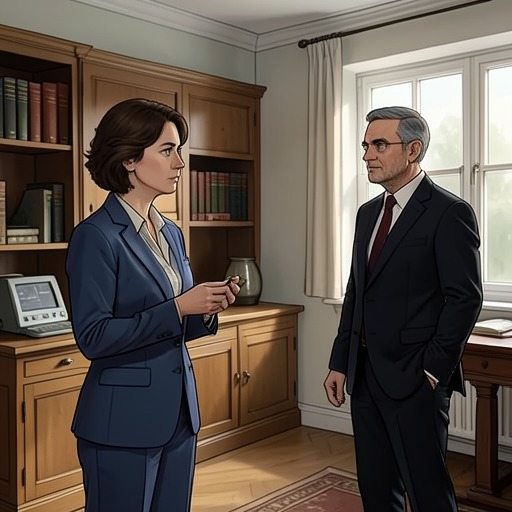
When Megan Hipwell is missing, Rachel connects her memory gaps to the possibility that she might have been involved. She knows she has lied repeatedly to the police, and she fears that something occurred on the night in question that she cannot remember. The thought of having attacked Megan and disposed of her body strikes her as ridiculous, but she cannot dismiss it merely by consulting her own memory. The absence of recollection becomes a source of suspicion rather than reassurance.
A second missing interval deepens the fear. Rachel remembers going to the pub and then being on the train, but not the period between five o’clock and 10:15. A message from Tom reports that he had spent much of an hour looking for her, that she had frightened Anna Watson, and that she must stay away from his family. Rachel does not know what prompted his search or what she may have done to Anna. The message supplies another person’s account of her absence, but it does not fill in the missing events.
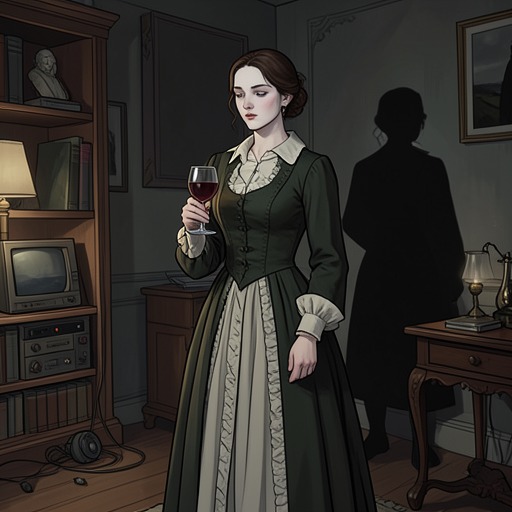
In response, Rachel imagines entering Tom and Anna’s home and attacking Anna. The scene is explicitly her speculation: she pictures what might have happened, but does not recover a memory or establish that she went into the house. This difference between remembered action and imagined possibility is central to the concept’s role in the novel. Rachel’s fear can produce a vivid explanation without making that explanation true.
Narrative Function and Limits
The blackouts organize Rachel’s experience around breaks in knowledge. The narrative presents a fragment of the night, then leaves her—and the reader—to weigh bodily aftermath, remembered locations, other people’s words, and possible explanations. Each source has limits: a remembered sequence stops abruptly, a message reports consequences without their cause, and an imagined scene expresses fear rather than verified history.
The result is a sustained tension between responsibility and uncertainty. Rachel cannot assume that she is innocent simply because she remembers nothing; equally, she cannot treat the blank itself as evidence that she committed the acts she fears. Her concern about her drinking is linked to Tom’s earlier efforts to make her recognize the possible damage, while the investigation into Megan’s disappearance gives each lost hour a sharper consequence. Alcohol-induced blackouts therefore function as both a condition Rachel fears and a narrative form: they leave decisive stretches of experience unavailable, forcing suspicion to grow in the space where memory should be.